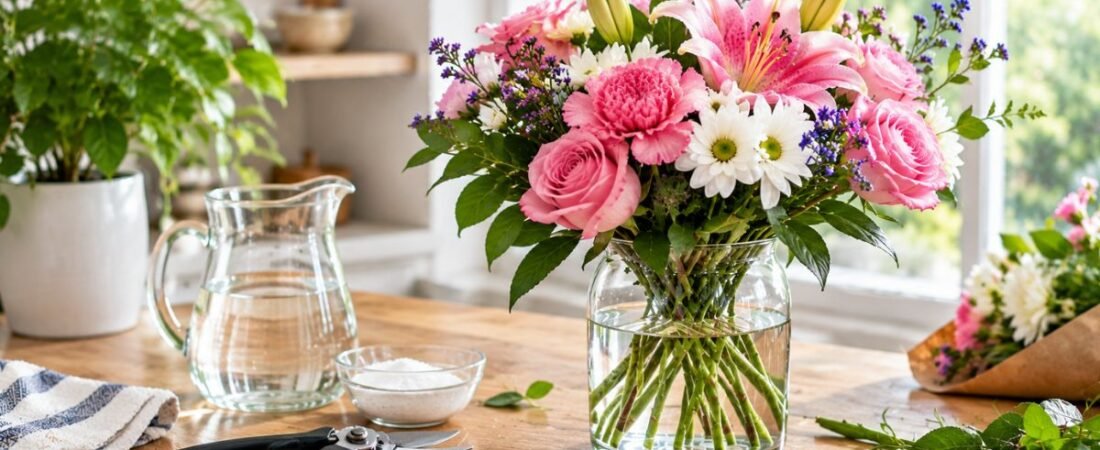
Fresh flowers can instantly make my home feel brighter and more welcoming, but I know how frustrating it is when a beautiful bouquet starts drooping after only a few days. Over the years, I have learned that keeping cut flowers fresh usually does not require complicated tricks. Good basic care makes the biggest difference.
So, how to keep flowers fresh longer? In my experience, we should focus on a few essentials: start with a clean vase, trim the stems properly, keep leaves out of the water, refresh the water regularly, and choose a suitable location for the bouquet.
Here are the simple steps I use to help fresh flowers stay attractive for as long as possible.
Quick Answer: How to Keep Flowers Fresh Longer
When I bring fresh flowers home, this is the basic routine I follow:
| Care step | What I do |
| Clean the vase | I wash it thoroughly before adding flowers |
| Trim the stems | I cut about ½–1 inch from each stem |
| Remove leaves | I remove leaves that would sit underwater |
| Add fresh water | I use clean water from the start |
| Use flower food | I follow the product directions |
| Refresh the water | I replace it when it becomes cloudy or dirty |
| Choose the right location | I keep flowers away from excessive heat |
| Remove fading flowers | I take out damaged blooms and foliage |
| Check the stems | I recut damaged or dirty stem ends |
| Keep fruit away | I avoid placing flowers directly beside ripening fruit |
These are the habits I find most useful, and we do not need a complicated routine to follow them.
1. Start With a Clean Vase
One of the first things I do with any new bouquet is clean the vase.
A vase that still has residue, old water, or flower debris can make fresh water dirty much faster. I wash mine thoroughly with warm water and dish soap, then rinse it well before arranging the flowers.
I also make a point of cleaning the vase whenever I replace a bouquet. Simply pouring out the old water and refilling the same unwashed container is not a habit I recommend.
A clean vase gives us a much better starting point.
2. Trim the Stems Before Arranging
I always give fresh flower stems a new cut before placing them in water.
Using clean, sharp floral scissors or a sharp knife, I trim roughly ½ to 1 inch from the bottom of each stem. I usually make the cut at a slight angle so the stem has a fresh exposed surface and is less likely to sit completely flat against the bottom of the vase.
I avoid crushing or tearing the stems because a clean cut is much better for the bouquet.
Whenever flowers have spent a while out of water, I am especially careful to refresh the stem ends before arranging them.
3. Remove Leaves Below the Waterline
Before I put flowers into a vase, I look closely at the lower part of each stem.
I remove any leaves that would sit underwater. Submerged foliage can break down and contribute to dirty water and unpleasant odors.
We do not need to strip every leaf from the stem. I simply clear away the leaves that would remain below the waterline and leave the healthy upper foliage in place.
It takes only a minute, but it is one of the easiest steps we can get right.
4. Use Fresh Water
I never underestimate the importance of fresh water.
After trimming the stems, I place the flowers into clean water as soon as possible. I also check the water level regularly because some flowers can drink much faster than we expect.
During warm weather, I pay even more attention to the vase. I do not let the water level fall so low that the lower stems are barely covered.
For me, checking the water has become one of the simplest everyday flower-care habits.
5. Use Flower Food Correctly
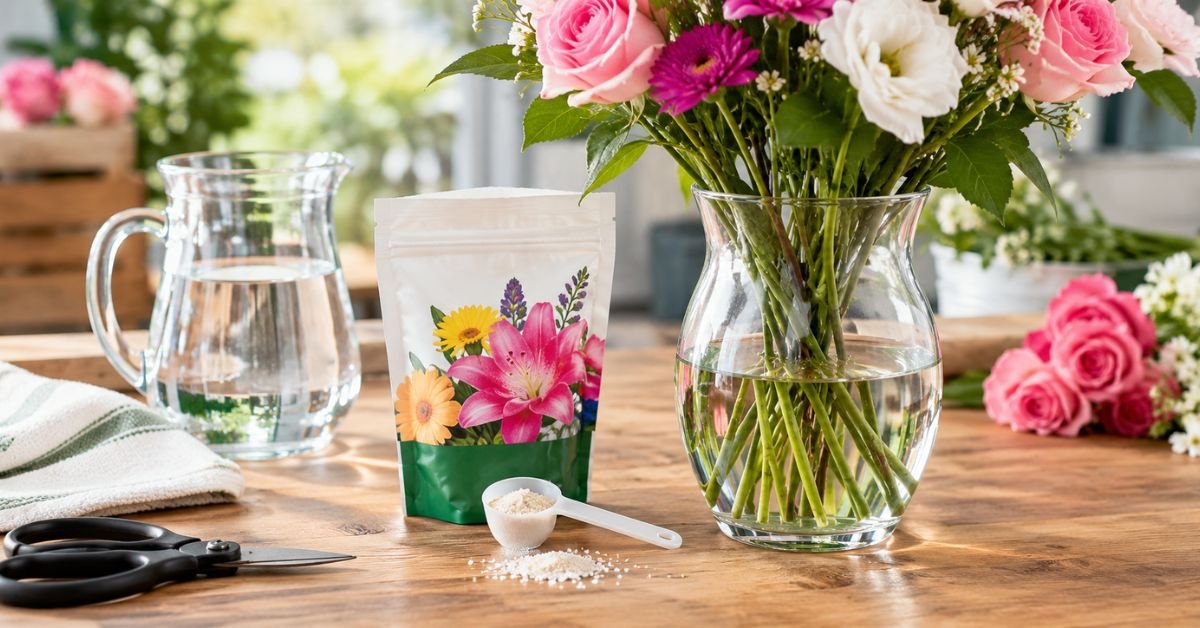
When commercial flower food is available, I prefer using it rather than experimenting with random household ingredients.
Proper flower food is formulated for cut flowers, and I always follow the instructions on the packet. I never assume that adding extra powder or solution will automatically make my flowers last longer.
There are countless homemade flower-food recipes online, but their results can vary. We can find plenty of suggestions involving common kitchen ingredients, but I prefer keeping the routine simple and consistent.
Good vase hygiene, fresh water, and proper stem care should always come first.
6. Change the Water Regularly
One of the biggest mistakes I see is waiting too long to refresh the vase.
I check my flowers regularly and change the water when it becomes cloudy, dirty, or starts developing an unpleasant smell. When I do this, I prefer cleaning the vase too rather than simply adding more water.
My routine is simple: I remove the flowers, rinse the vase, add fresh water, inspect the stems, remove damaged material, and then return the bouquet.
We do not need to make this a complicated chore. A few minutes of attention can keep the arrangement in much better condition.
7. Keep Flowers Away From Heat
Where we place a bouquet can have a surprising effect on how quickly it fades.
I try to keep my flowers away from radiators, heaters, hot appliances, and other heat sources. I also avoid very hot windows where strong sunlight can raise the temperature around the arrangement.
A bright but relatively cool location is usually much better.
I am also careful around strong heating or cooling vents because constant drafts can create an unstable environment for cut flowers.
8. Keep Your Bouquet Away From Ripening Fruit
This is a small detail that I used to overlook.
Ripening fruit releases ethylene gas, which can contribute to aging in many flowers. Because of that, I avoid putting a fresh bouquet directly beside a fruit bowl filled with ripening apples, bananas, pears, or similar fruit.
A dining table may seem like the perfect place for flowers, but I would rather move the bouquet to another suitable spot if the fruit bowl is right beside it.
Sometimes these small changes are easier than trying another complicated flower hack.
9. Remove Fading Flowers
I do not wait for the entire bouquet to look tired before taking action.
When one flower starts fading, I remove it from the arrangement. I also take out petals, leaves, or stems that have started to decay.
This helps keep the bouquet cleaner and makes the remaining flowers look much better.
With mixed bouquets, this matters even more because we cannot expect every flower variety to age at exactly the same speed.
10. Check and Recut the Stems
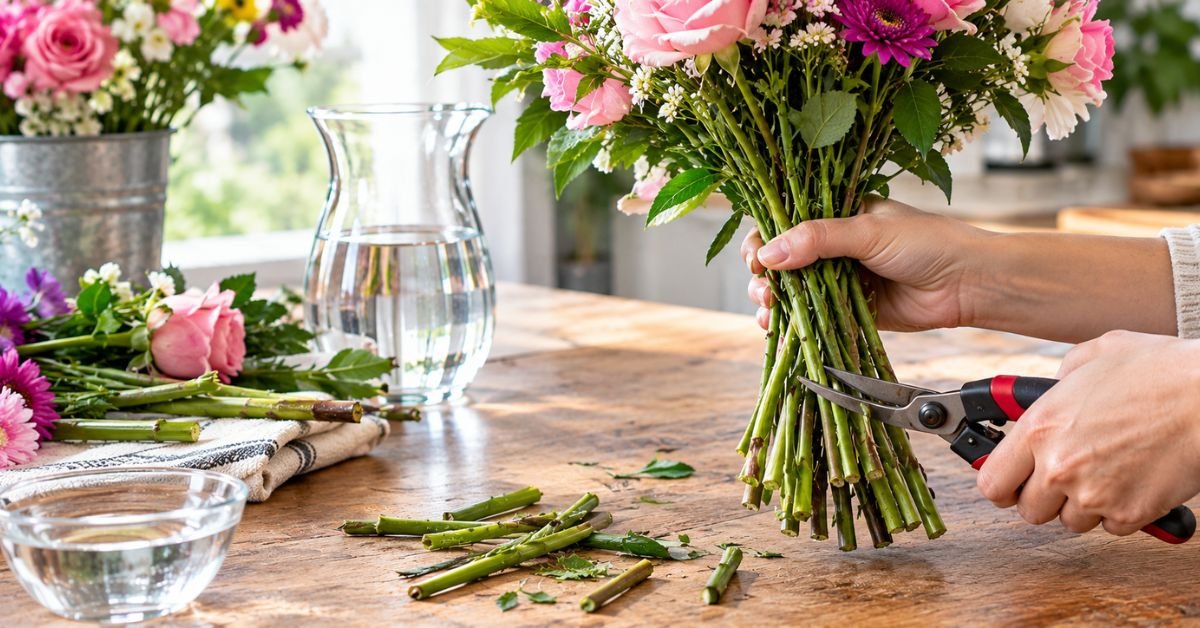
Whenever I change the water, I take a quick look at the stem ends.
If they appear damaged, soft, slimy, or discolored, I give them a fresh trim with clean, sharp tools. I usually remove only a small section rather than cutting away too much of the stem.
My goal is simply to maintain a clean cut surface and give the flowers the best chance of taking up water.
This is one of those small maintenance steps that is easy to forget but worth doing.
11. Remember That Different Flowers Need Different Attention
One thing I have learned from working with flowers is that there is no single care routine that behaves exactly the same for every variety.
Roses, tulips, lilies, hydrangeas, carnations, chrysanthemums, and sunflowers all have their own characteristics.
For example, tulips can continue growing and bending after they are cut, while hydrangeas can be especially sensitive to dehydration.
That is why I like to start with the basic care routine and then watch what my particular flowers are doing. We get better results when we pay attention to the bouquet instead of treating every flower exactly the same.
12. Start With Fresh, Healthy Flowers
For me, flower care really begins at the time of purchase.
When I choose fresh flowers, I look for firm stems, healthy foliage, and blooms without obvious bruising or decay. Depending on the variety, I also like flowers with healthy buds that have not completely opened yet.
If a bouquet already looks heavily wilted or damaged when we buy it, there is only so much we can do later.
Starting with fresh flowers gives us a much better chance of enjoying a longer vase life.
How Long Do Cut Flowers Last?
There is no guaranteed lifespan for every cut flower. In my experience, freshness, variety, handling, water quality, temperature, and room conditions can all make a difference.
| Flower | General vase life |
| Carnations | 10–14 days |
| Chrysanthemums | 10–14 days |
| Lilies | 7–14 days |
| Sunflowers | 7–12 days |
| Alstroemeria | 6–10 days |
| Roses | 5–10 days |
| Tulips | 5–10 days |
| Hydrangeas | 5–10 days |
These are general ranges rather than promises. One bouquet may last longer, while another may fade sooner depending on its condition and environment.
How to Keep Roses Fresh Longer
Roses are one of the flowers I pay close attention to because their large blooms can show dehydration fairly quickly.
I keep the vase clean, give the stems a fresh cut, and remove leaves that would sit underwater. I also choose a cooler location away from direct heat and strong sunlight.
As individual roses begin to fade, I remove them rather than leaving them in the arrangement until they completely deteriorate.
How to Keep Tulips Fresh Longer
Tulips are interesting because they can continue growing after we bring them home.
I use a clean vase, fresh water, and a relatively cool location. I do not worry too much when the stems bend slightly because that can be part of their normal behavior.
I mainly focus on keeping the water fresh and protecting the bouquet from excessive heat.
How to Keep Hydrangeas Fresh Longer
Hydrangeas can lose water quickly because their flower heads are large and heavy.
When I care for hydrangeas, I check the water level regularly and pay close attention to any early signs of drooping.
If I notice them beginning to wilt, I deal with the problem early rather than waiting until the flowers are severely dehydrated.
What to Do When Flowers Start Wilting
I do not automatically throw away a bouquet just because it starts to droop.
First, I check the water level. Then I inspect the vase and stem ends. If the stems look dirty or damaged, I give them a fresh cut and place them back into clean water.
I also remove damaged leaves and petals and move the bouquet away from heat or strong sunlight if necessary.
Some flowers recover better than others, so we should not expect every wilted bloom to return completely to its original condition. Still, early action can sometimes make a noticeable difference.
Common Mistakes That Shorten Flower Life
Using a Dirty Vase
I always recommend washing the vase before starting a fresh arrangement.
Leaving Leaves Underwater
Submerged foliage can break down and make the water dirty.
Forgetting to Trim the Stems
Old or damaged stem ends may not take up water as effectively as a fresh cut.
Ignoring Cloudy Water
When the water looks cloudy or smells unpleasant, I treat that as a clear sign that the bouquet needs attention.
Putting Flowers in Direct Heat
Hot rooms, heaters, appliances, and intense sunlight can cause flowers to decline faster.
Putting Flowers Next to Fruit
I keep bouquets away from ripening fruit whenever practical.
Using Too Many Homemade Remedies
I do not believe that adding more ingredients automatically means better flower care. We are usually better off getting the basic care routine right first.
Treating Every Flower Exactly the Same
Different flowers have different characteristics, so I always pay attention to what the individual bouquet needs.
My Simple Flower-Care Routine
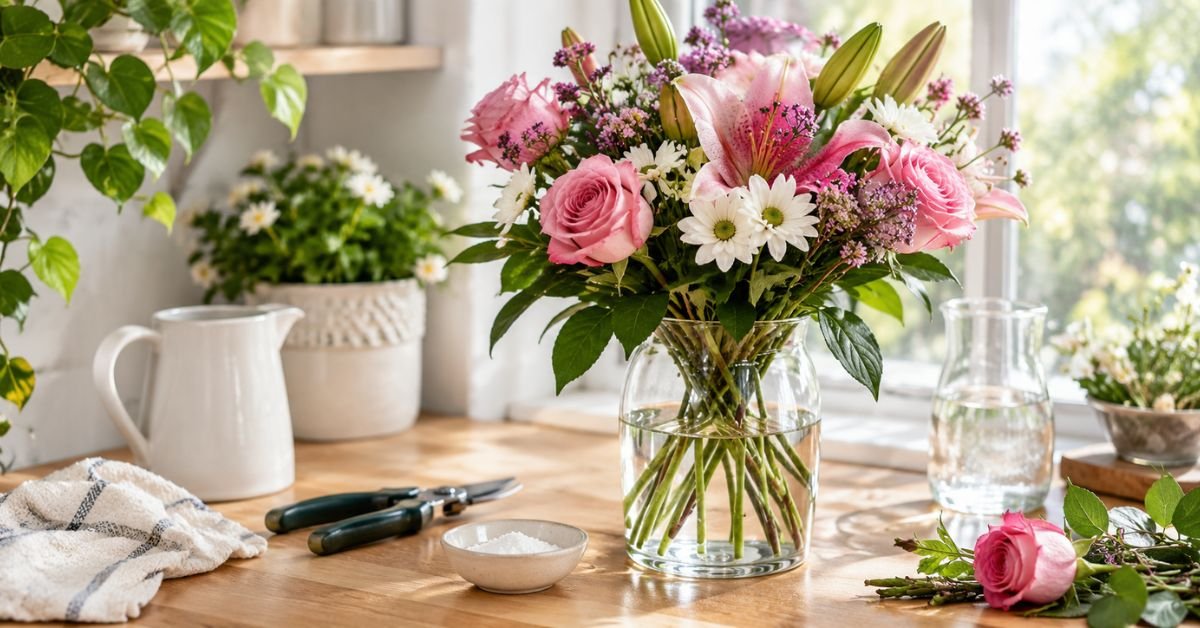
We do not need to spend a lot of time caring for fresh flowers.
When I bring flowers home: I clean the vase, trim the stems, remove submerged leaves, add fresh water and flower food, and place the bouquet somewhere cool.
Over the next few days: I check the water level, remove fallen leaves or petals, and watch for any early signs of wilting.
When the water becomes cloudy: I clean the vase, replace the water, inspect the stems, and remove decaying material.
When one flower fades: I remove it before it becomes heavily damaged so the remaining bouquet stays cleaner and more attractive.
Frequently Asked Questions
Q1. How do you make flowers last longer in a vase?
I start with a clean vase, fresh water, properly trimmed stems, and flower food. I also remove underwater leaves and keep the bouquet away from excessive heat, direct sunlight, and ripening fruit.
Q2. Does aspirin make flowers last longer?
Aspirin is a popular home remedy, but I would not treat it as a guaranteed solution. Good vase hygiene, fresh water, correct stem trimming, and suitable flower food are more dependable parts of routine care.
Q3. How often should you change flower water?
I check the water every day and replace it when it becomes cloudy, dirty, or unpleasant-smelling. Whenever possible, I clean the vase at the same time.
Q4. Should flower stems be cut at an angle?
I usually make a slight angled cut because it gives the stem a fresh exposed surface and reduces the chance of it sitting completely flat on the bottom of the vase. The most important thing is making a clean cut with a sharp tool.
Q5. Does sugar make flowers last longer?
Sugar appears in many homemade flower-food recipes, but I would not rely on random amounts for every bouquet. When available, I prefer a properly prepared commercial flower food.
Q6. Why are my flowers wilting even though there is water in the vase?
There can be several reasons, including damaged stems, poor water quality, heat, dehydration, natural aging, or the specific needs of the flower variety. I usually check the vase, water, stems, and location first.
Q7. Where should I keep fresh flowers?
I prefer a relatively cool indoor location away from direct sunlight, heaters, hot appliances, strong drafts, and ripening fruit. Avoiding major temperature changes can also help.
Final Thoughts
Knowing how to keep flowers fresh longer is really about getting the simple things right.
I always come back to the same basics: a clean vase, fresh water, properly trimmed stems, no submerged leaves, and a suitable location away from excessive heat. After that, I simply keep an eye on the bouquet and respond when I notice changes.
We do not need an elaborate routine or a cabinet full of flower hacks. A few minutes of regular care can help us enjoy fresh flowers longer and make every bouquet feel worth bringing home.