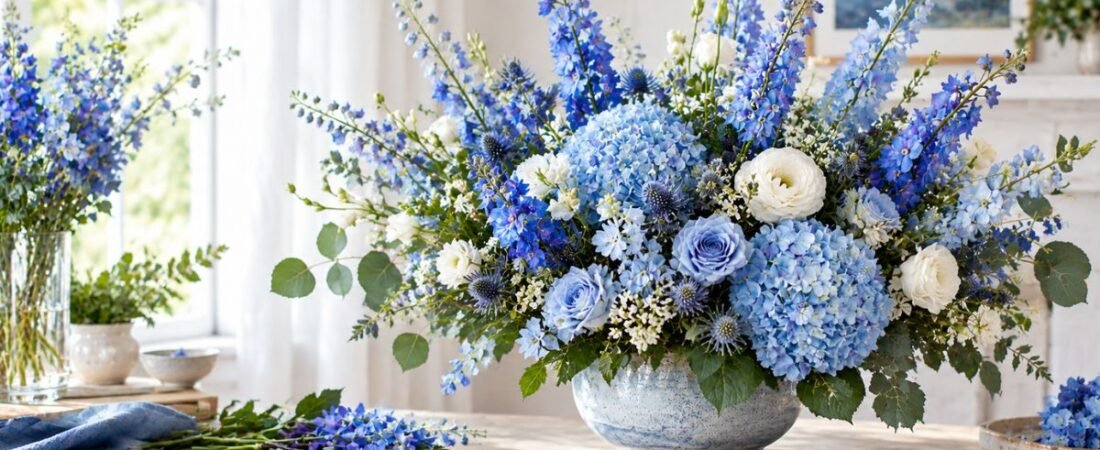
What is the secret to mastering a stunning blue flower arrangement? To design a professional-grade blue floral display, you must balance tall spiky textures with heavy focal blooms, understand natural color theory, and pair true blue varieties like delphiniums and hydrangeas with contrasting peach or crisp white accents.
I have spent years working as a professional floral designer and horticulturist, and few palettes capture attention quite like cool blue tones. They bring an immediate sense of calm and elegance to a room. They are also notoriously tricky to work with. True blue flowers are remarkably rare in nature, and amateur arrangements often end up looking muddy or visually disjointed because people mix clashing violet tones without a clear structural plan.
We are going to skip the generic photo galleries that offer zero practical advice. This guide will walk you through exact stem selection, vessel mechanics, and color pairings so you can build a breathtaking floral display for your home or next special event.
Quick Care Matrix for Blue Cut Flowers
| Floral Element | Best Variety | Primary Design Role |
| Focal Blooms | Blue Hydrangeas | Creates massive visual weight and a solid base |
| Height Spikes | Delphinium or Larkspur | Adds vertical line and dramatic height |
| Textural Accents | Globe Thistle or Cornflower | Breaks up solid color masses with unique shapes |
| Filler Greenery | Silver Dollar Eucalyptus | Grounds the cool palette with muted green-gray tones |
Personal Pro-Tip: Always cut your flower stems at a sharp 45-degree angle underwater using a clean pair of floral shears. This prevents air bubbles from trapping inside the vascular system, allowing the blue stems to drink water efficiently.
The Botanical Reality of Working with Blue Flowers
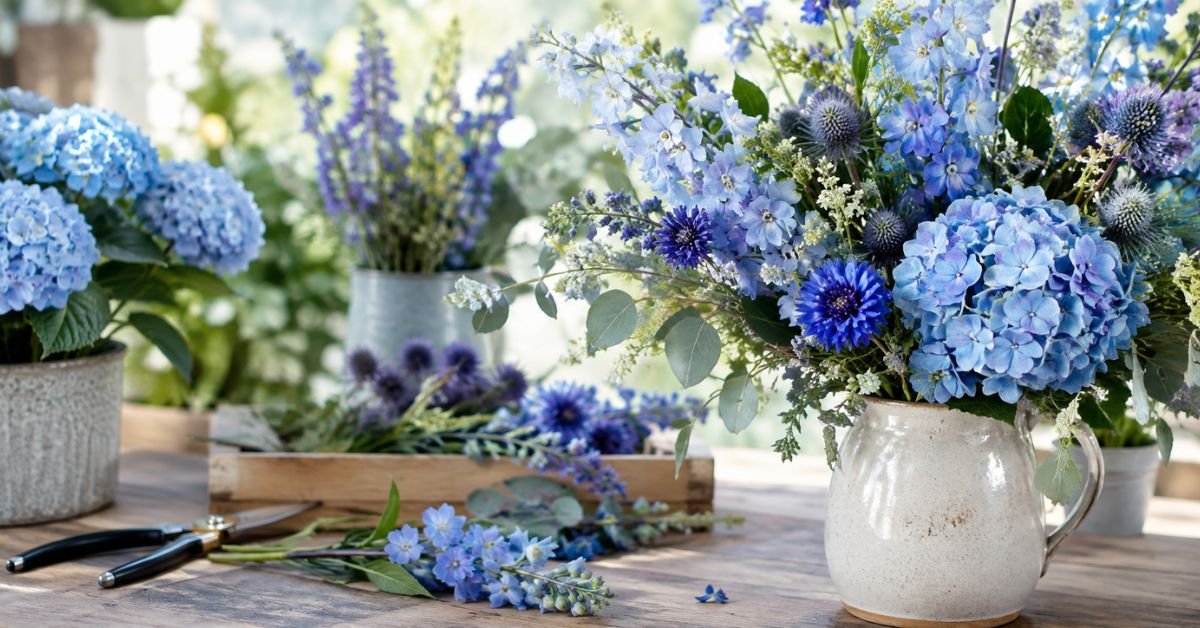
If you walk out into a garden, you will quickly notice that true, vibrant blue is scarce. Most flowers marketed as blue actually lean heavily into purple, lavender, or violet.
When you build a blue flower arrangement, you have to decide whether you want a cool, moody ocean aesthetic or a bright, whimsical garden feel. Varieties like Italian bugloss, Tweedia, and certain strains of delphinium offer a striking, true sky-blue. On the other hand, traditional hydrangeas shift their color based on the acidity of the soil they grew in. If your soil pH is acidic, those hydrangeas turn a gorgeous, deep sapphire.
Knowing your exact flower shades prevents you from accidentally pairing a violet-toned iris with a cyan delphinium, which can make the entire piece look visually confused under indoor lighting.
Personal Pro-Tip: Be cautious with dyed blue flowers, such as sprayed carnations or roses. They often bleed heavy synthetic dye into your vase water, staining your container and ruining the surrounding water clarity.
Mastering Color Theory for Your Blue Floral Design
Throwing a dozen random blue stems into a vase rarely works. Professional design relies on deliberate color relationships to make the arrangement pop.
For a serene, sophisticated look, use a monochromatic palette. Layer light sky-blue hydrangeas with medium periwinkle cornflowers and deep navy thistle. The trick here is varying the size and shape of the blooms so they do not blend into a single boring blob of color.
If you want something vibrant and eye-catching, use complementary contrast. Blue sits directly opposite orange on the color wheel. Pairing cool blue flower spikes with small touches of peach roses, craspedia balls, or warm yellow ranunculus creates an electric visual tension that immediately draws the eye across a room.
Personal Pro-Tip: Avoid surrounding your blue arrangement with heavy red or pink accents unless you are designing specifically for a holiday theme. Warm reds will completely overpower the delicate, calming energy of blue petals.
Selecting the Right Vessel and Mechanics
Amateur arrangements often fall apart because the stems slip around inside the vase. The secret to professional stability lies in matching your vessel to your stem types.
Heavy, globe-shaped blooms like hydrangeas need wide-mouth ceramic or glass cylinder vases to support their massive heads. Spiky flowers like delphinium demand a heavy, weighted base because their height makes top-heavy arrangements prone to tipping over on a dining table.
If your vase mouth is too wide, create a natural grid using clear waterproof floral tape across the top opening. This creates a supportive matrix that holds every individual stem precisely where you place it.
Personal Pro-Tip: Never let foliage sit below the waterline inside your vase. Submerged leaves rot rapidly, breeding bacteria that will shorten the lifespan of your entire arrangement by days.
Step-by-Step Guide to Assembling Your Blue Arrangement
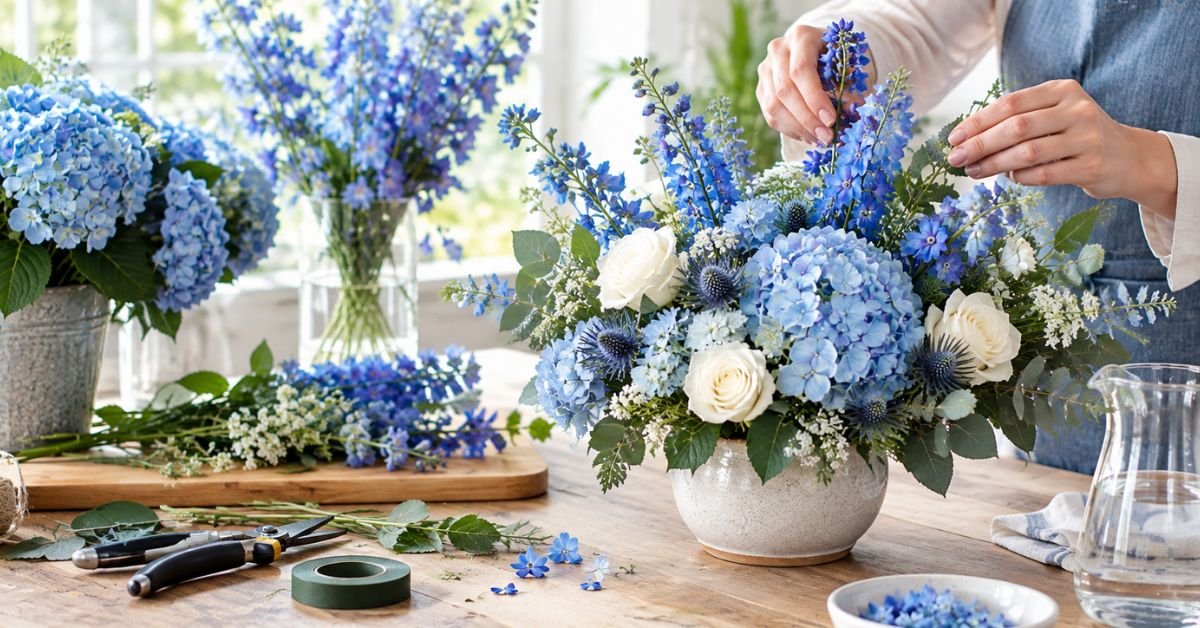
Building a professional arrangement follows a strict architectural process. You cannot just jam everything in at once.
Start with a completely clean vase filled with cold water and your packet of professional floral preservatives.
First, establish your framework. Insert your tall structural elements, like delphinium or larkspur, to dictate the overall height and width of the design. Next, drop in your heavy focal flowers, like hydrangeas, anchoring them lower in the vase to form a solid visual center of gravity.
After your foundation is set, weave in your secondary textural elements, like globe thistles or blue star flower (Tweedia), filling any empty gaps. Finally, tuck trailing greenery or muted eucalyptus around the rim of the vessel to hide the container edge and tie the piece together.
Personal Pro-Tip: Step back and look at your arrangement from across the room every few stems. It is easy to get tunnel vision when you are staring straight down into the vase from above.
Common Mistakes That Ruin Floral Arrangements
Even the most expensive flowers will wilt prematurely if you make basic handling errors.
The biggest mistake is ignoring temperature control. People love to place their fresh arrangements right next to a sunny kitchen window or directly under an active heating vent. Intense heat and direct sun cause delicate petals to transpire moisture faster than the stems can drink, resulting in instant wilting.
Another frequent error is forgetting to change the vase water. Stagnant water breeds microscopic bacteria that clog up stem walls. You should completely dump out the water, rinse the vase, re-cut the stems, and refill with fresh cold water every two days.
Personal Pro-Tip: Keep your floral display away from the fruit bowl. Ripening bananas and apples release ethylene gas, which acts as a botanical aging hormone that forces flowers to drop their petals prematurely.
Troubleshooting Common Cut Flower Problems
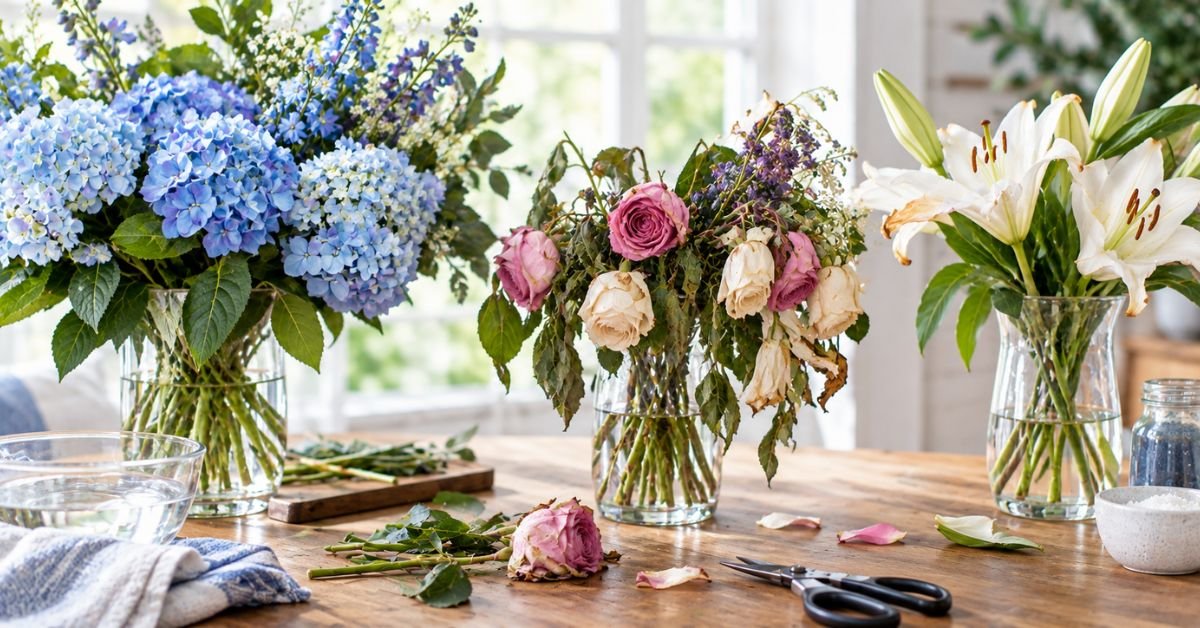
Learning how to read your fading flowers helps you extend the life of your display.
If your hydrangeas suddenly collapse and look limp even though the vase is full of water, they are suffering from vascular blockage. Woody stems like hydrangeas secrete a sticky sap that seals the cut end. Take the stem out, make a fresh vertical slit up the bottom inch of the stem with a sharp knife, and dip it in warm water.
If you notice sticky residue or tiny green bugs on your stems, you brought home aphids from the market. Rinse the affected stems gently under the kitchen faucet with a mild drop of dish soap before adding them to your main display.
Personal Pro-Tip: If a heavy blue flower head starts drooping prematurely, pull it out of the arrangement, submerge the entire stem and bloom horizontally in a sink filled with cool water for an hour, and watch it miraculously crisp back up.
7 Frequently Asked Questions About Blue Flower Arrangements
Q1: What are the best natural flowers for a true blue color?
Delphinium, larkspur, cornflower, Tweedia, and certain varieties of hydrangea offer the most vibrant and natural blue shades available to floral designers.
Q2: How can I make my cut flowers last longer in a vase?
Change the water every two days, re-cut the stems at an angle, keep the arrangement away from direct sunlight, and always use clean, sterilized vases.
Q3: Can I dye white flowers blue at home?
Yes. You can place white roses or carnations in a vase of water mixed with liquid floral dye or food coloring, though results can sometimes look unnatural or uneven.
Q4: What greenery pairs best with a blue flower arrangement?
Muted, gray-green foliage like silver dollar eucalyptus, dusty miller, and olive branches complement cool blue tones without overpowering them.
Q5: Why do my blue hydrangeas turn purple over time?
As cut flowers age and lose vitality, changes in internal cellular pH often cause blue anthocyanin pigments to shift toward purple or pink.
Q6: Are blue flower arrangements popular for weddings?
Yes. They are heavily utilized for winter-themed celebrations, coastal destination weddings, and modern minimalist events seeking a serene color palette.
Q7: Should I remove all the leaves from the flower stems?
You should strip away any leaves that will fall below the waterline in your vase, but leaving upper foliage intact helps the stem pull water upward through transpiration.
Final Thoughts on Designing with Blue Flowers
Creating an incredible blue flower arrangement comes down to honoring the natural structure of your stems and respecting the mechanics of floral design. By balancing heavy focal bases with soaring height lines, managing your water hygiene, and avoiding harsh temperature swings, you can craft a stunning, long-lasting display that transforms any room.
Have you ever tried designing a monochromatic blue arrangement, or do you prefer mixing in contrasting warm tones? Drop a comment below to share your experience, or ask a question if you need help planning your next floral project!